
Published February 19, 2026
Florida Housing Market Forecast 2026: Is it Finally a Buyer’s Market?


For years, anyone trying to buy a home in the Sunshine State felt like they were perpetually chasing a runaway train. From the bidding wars of the early 2020s to the "lock-in effect" caused by historic interest rate spikes, the Florida real estate landscape has been nothing short of a roller coaster. But as we move through February 2026, the air is starting to feel different. The frenetic energy of past years has cooled into a more measured, stable pace. If you are looking at the Florida housing market forecast for the remainder of the year, the big question isn't just about whether prices are rising, but rather if the leverage has finally shifted back to the person signing the mortgage.
The current data suggests that Florida is entering a "Great Normalization." We are no longer seeing the 20% year-over-year price spikes that defined the pandemic era. Instead, we are looking at a market where inventory is finally catching up with demand, giving buyers a luxury they haven't had in half a decade: time. Whether you are eyeing a condo in downtown Miami or a suburban family home in Orlando, understanding the nuances of the 2026 landscape is the key to making a smart investment.
A Shift in Power: From Sellers to a Balanced State

For much of 2024 and 2025, sellers held all the cards. Buyers were often forced to waive inspections, pay thousands over appraisal, and make decisions in hours. However, the Florida housing market forecast for 2026 indicates a significant pivot. Inventory levels across the state have risen nearly 9% compared to this time last year. This doesn't mean the market is crashing; rather, it means the supply of homes is finally reaching a healthy equilibrium.
In many Florida metros, we are now seeing a "months’ supply of inventory" hit the 4 to 5-month mark. In real estate terms, a perfectly balanced market sits around 6 months. We aren't quite there yet, but we are a far cry from the 1.5-month supply that triggered the chaos of years past. For a buyer, this means you can actually take a weekend to think about a property without fear that it will be under contract before you finish your morning coffee.
Mortgage Rates and the Cost of Borrowing
One of the most influential factors in the Florida housing market forecast is the movement of interest rates. In early 2026, mortgage rates stabilized in the low 6% range, with some optimistic lenders offering high 5s for borrowers with exceptional credit. While we may never see the 3% rates of 2020 again, the predictability of the current environment is a massive win for affordability.
According to Federal Reserve policy data, interest rate movements continue to influence borrowing costs.
When rates were fluctuating wildly, buyers were afraid to commit. Now, with a "new baseline" established, residents are calculating their buying power with more confidence. Slower price growth combined with rising wages has actually made the monthly cost of owning a home slightly more manageable than it was eighteen months ago. If you are curious about how these numbers affect your specific situation, checking your current home value can give you a clear starting point for your next move.
Regional Differences: A Tale of Two Floridas

It is a mistake to treat Florida as one giant market. The Florida housing market forecast varies significantly depending on where you are looking. Coastal hubs like Miami and Naples remain "sticky" when it comes to pricing, largely driven by international investors and high-net-worth individuals who often pay in cash. In these areas, sellers still retain a fair amount of leverage because the demand for the Florida lifestyle is global.
Conversely, in secondary markets and inland cities like Ocala, Jacksonville, and parts of the Orlando suburbs, the buyer’s tilt is much more apparent. These areas have seen a surge in new construction, which has flooded the market with fresh options. Builders in these regions are now offering significant concessions, such as rate buy-downs and closing cost assistance, to move their inventory. This makes these "path of progress" locations the primary targets for first-time buyers and families looking for more square footage for their dollar.
The Impact of Insurance Reforms
You cannot talk about the Florida real estate market without mentioning property insurance. For years, skyrocketing premiums were the "hidden cost" that kept many people from buying. However, the Florida housing market forecast for 2026 is actually brighter on this front than most expected. Following the legislative reforms of 2023 and 2024, more than a dozen new insurers have entered the state, bringing much-needed competition back to the private market.
While insurance isn't "cheap," the rate of increase has slowed dramatically. In some cases, homeowners are seeing their first premium decrease in years as the state’s "insurer of last resort," Citizens, successfully offloads hundreds of thousands of policies back to private carriers. This stabilization is a major tailwind for the housing market, as it lowers the total cost of ownership and makes it easier for buyers to qualify for loans.
Why Inventory is the Secret Hero of 2026
The recovery of for-sale inventory is the single biggest factor pushing us toward a buyer’s market. During the height of the "lock-in" effect, homeowners were terrified to sell because they didn't want to trade their 3% mortgage for a 7% one. In 2026, that psychological barrier has weakened. Many people are realizing that life doesn't stop for interest rates—babies are born, jobs change, and retirees still want to move closer to the beach.
As more "existing" homes hit the market, buyers finally have the leverage to negotiate. We are seeing a return of the "inspection contingency" and "repair credits," which were virtually non-existent two years ago. For a savvy buyer, this means you can find a home that needs a little TLC and negotiate a price that reflects the work required, rather than paying a premium for a "lipstick-on-a-pig" flip. Exploring your options to buy Florida real estate in this environment allows you to be much more selective about your future home.
Population Growth: The Floor Under the Market
While the market is cooling, a "crash" remains highly unlikely because Florida is still the fastest-growing state in the country. The Florida housing market forecast is underpinned by the fact that nearly 1,000 people move to the state every single day. This constant influx of new residents creates a natural floor for property values.
Even if sales volume remains lower than the record-breaking peaks of the pandemic, the demand for housing—both for sale and for rent—is persistent. This is particularly true for "work-from-anywhere" professionals who are drawn to Florida’s tax-friendly environment and year-round outdoor lifestyle. As long as people keep moving to Florida, the real estate market will remain one of the most resilient sectors of the economy.
New Construction vs. Resale Homes
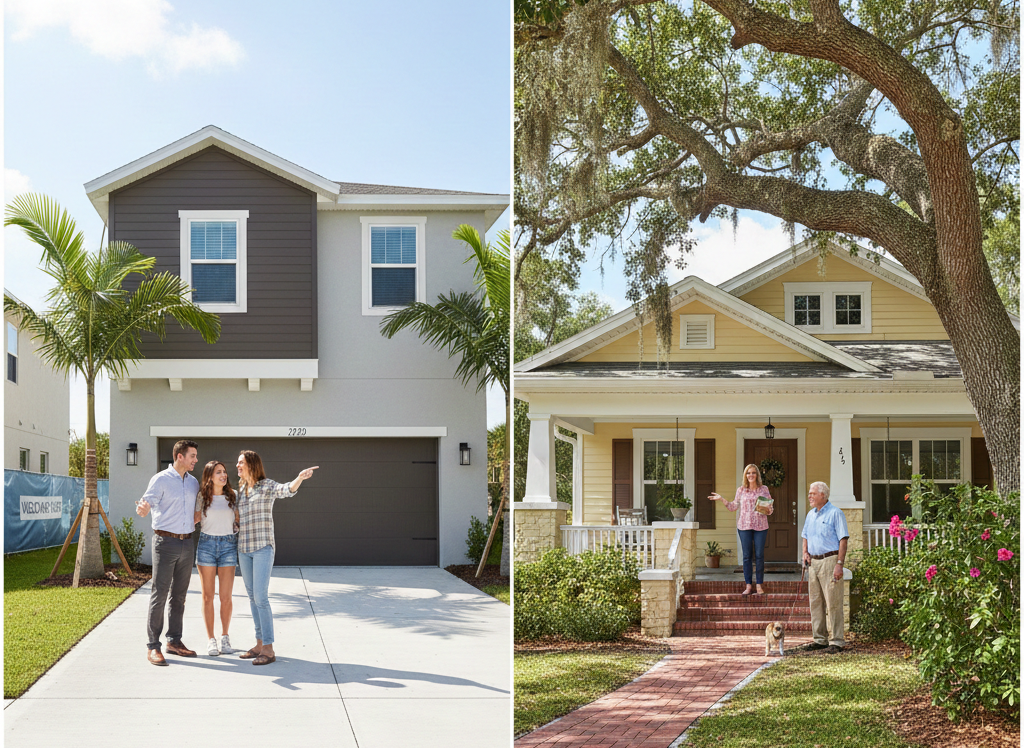
In 2026, the battle for buyers is being fought between traditional homeowners and massive homebuilding corporations. Because builders can control their own financing, they are currently the biggest competition for regular sellers. Many builders in Florida are offering "special" 5.25% or 5.5% interest rates, which is significantly lower than the market average for resale homes.
However, resale homes still offer the advantage of established neighborhoods, mature landscaping, and often, more central locations. The Florida housing market forecast suggests that resale sellers are becoming more realistic in their expectations to compete with these builder incentives. If you are looking to list your property, working with an experienced professional who understands these local dynamics is essential. You can find specialized support by viewing a local agent profile to see how modern marketing strategies are helping sellers stand out in a more crowded field.
The Rise of Multi-Generational Living
A fascinating trend emerging in the Florida housing market forecast for 2026 is the demand for "next-gen" suites or homes with two master bedrooms. With the cost of living still higher than pre-2020 levels, many families are pooling their resources. We are seeing adult children moving in with aging parents or siblings buying large homes together.
Builders and renovators are responding to this by creating spaces that offer both connection and privacy. Homes with accessory dwelling units (ADUs) or finished mother-in-law suites are fetching a premium in 2026. This shift in how we live is reshaping the suburban landscape, particularly in central Florida, where land is still available for these larger, more versatile footprints.
Investment Potential: Short-Term vs. Long-Term Rentals
For investors, the Florida housing market forecast remains a mixed bag of challenges and opportunities. The "short-term rental gold rush" in cities like Orlando and Kissimmee has stabilized as local regulations have tightened. Investors are now looking at long-term rentals in high-growth areas like Port St. Lucie and the Tampa exurbs.
With the median rent in Florida holding steady around $2,500, the "rent vs. buy" math is starting to tilt back toward buying for many residents. For investors, this means a stable tenant base. While you may not see the 20% annual appreciation of the past, a well-located Florida property in 2026 is still considered one of the safest hedges against inflation available in the American real estate market.
What Buyers Should Watch for in H2 2026
As we look toward the second half of 2026, the biggest wild card remains the Federal Reserve’s next moves. If inflation stays near the 2% target, we could see one or two more modest rate cuts, which would likely trigger a surge of "sidelined" buyers entering the market. If this happens, the "buyer’s market" window might close quickly as competition heats up again.
The advice for 2026 is clear: don't try to time the absolute bottom of the market. Instead, look for a home that fits your life and your budget. With more inventory and more room to negotiate, this is the best environment for buyers that we have seen in several years. The "panic" is gone, and in its place is a professional, orderly market where quality properties are still moving, but at a price that makes sense for both parties.
FAQs
Are home prices in Florida going down in 2026?
While some overvalued areas may see slight corrections, the general Florida housing market forecast is for stable prices with modest 2% to 3% growth. We are seeing a "plateau" rather than a drop, as high demand from new residents offsets the increase in inventory.
Is it a good time to buy a condo in South Florida?
The condo market is currently more of a buyer's market than single-family homes. New safety regulations and insurance costs have led to an increase in condo listings, giving buyers significant negotiating power, especially in Broward and Miami-Dade counties.
How is the property insurance situation affecting home sales?
Insurance has stabilized in 2026. While premiums are higher than they were five years ago, the entry of new insurance companies into the Florida market has slowed down the price hikes, making it easier for buyers to get through the underwriting process.
Which Florida cities are the most affordable in 2026?
Inland cities like Ocala, Tallahassee, and the suburbs of Jacksonville currently offer the best value for your money. These areas have seen significant development and offer a lower cost of living compared to the coastal metros.
Will mortgage rates go back to 3%?
Most economists agree that the "emergency" low rates of the pandemic era were an anomaly. The Florida housing market forecast for the foreseeable future assumes a "new normal" in the 5.5% to 6.5% range, which is historically quite low for a healthy economy.
Conclusion
The Florida housing market forecast for 2026 reveals a landscape that is finally breathing a sigh of relief. The days of desperate bidding wars and "sight-unseen" offers are largely behind us, replaced by a market that rewards patience, research, and local expertise. While affordability remains a hurdle for some, the combination of rising inventory, stabilizing insurance costs, and predictable mortgage rates has created the most buyer-friendly environment since 2019. Florida is no longer just a place for speculative gains; it is a market that is maturing into a stable destination for families, retirees, and long-term investors. Whether you are looking to plant roots or diversify your portfolio, the 2026 market offers a level of opportunity and leverage that makes this the perfect time to explore the Sunshine State’s real estate potential.


