
Published March 13, 2026
Cost of Buying a Home in Florida: Fees, Taxes, and Tips

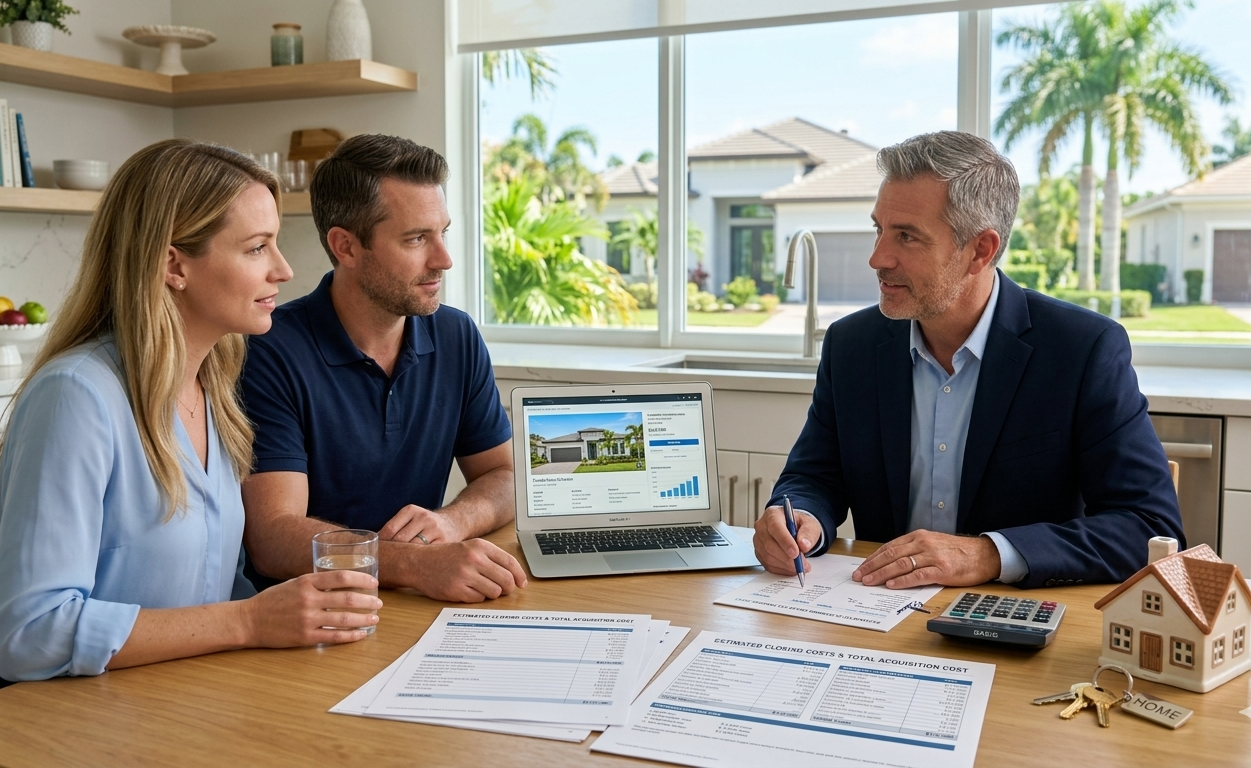
Moving to the Sunshine State is a dream for many, offering miles of coastline, a thriving economy, and a lifestyle that feels like a perpetual vacation. However, making this dream a reality requires a deep dive into the financial logistics of the transaction. The cost of buying a home in Florida involves much more than just the sticker price you see on a listing. From unique insurance requirements to specific state taxes, being prepared for the total expenditure is the only way to ensure a smooth closing. As the market evolves in 2026, understanding these variables is essential for both first-time buyers and seasoned investors looking to plant roots in the peninsula.
In Florida, the real estate landscape is diverse, ranging from high-rise condos in Miami to sprawling ranch-style homes in Ocala. Because of this variety, the cost of buying a home in Florida can shift significantly based on the county and the proximity to the coast. While the absence of a state income tax is a massive draw, the state compensates through other avenues like property taxes and documentary stamp duties. By breaking down every line item, from the initial earnest money deposit to the final recording fees, you can approach your purchase with total confidence and zero financial surprises.
The Initial Investment: Down Payments and Earnest Money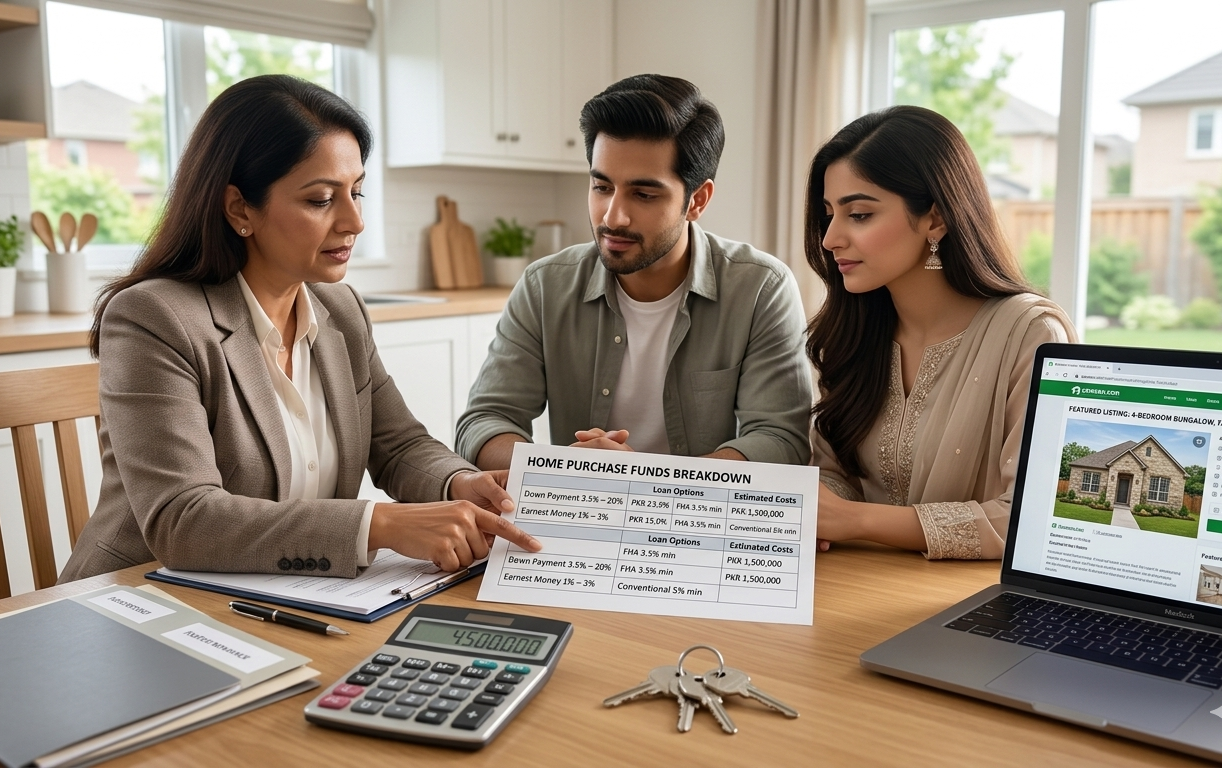
The first major hurdle in the cost of buying a home in Florida is the down payment. While a twenty percent down payment is the traditional gold standard to avoid private mortgage insurance, many Florida buyers utilize FHA loans with as little as three and a half percent down or VA loans with zero down for eligible veterans. It is vital to remember that a lower down payment often results in a higher monthly mortgage obligation, so finding the right balance for your long-term budget is key.
Before you even reach the down payment stage, you will need to provide earnest money. This is a "good faith" deposit submitted with your offer to show the seller you are serious. In the competitive Florida market, this typically ranges from one to three percent of the purchase price. This money is held in escrow and eventually applied to your down payment or closing costs. If you are just starting your search, exploring homes for sale in Florida can give you a better idea of current price points and the corresponding deposit amounts required in different regions.
Understanding Closing Costs in the Sunshine State
Closing costs are the various fees paid at the end of a real estate transaction. In Florida, these typically range from two to five percent of the total purchase price. One of the most significant components of the cost of buying a home in Florida is the Documentary Stamp Tax on Deeds. In most Florida counties, this is calculated at seventy cents per one hundred dollars of the purchase price. To see exactly how these fees apply to your specific purchase price and loan amount, this 2026 Florida documentary stamp breakdown provides clear examples and current calculation rules for both deeds and promissory notes. However, in Miami-Dade County, the rate is sixty cents plus a surcharge on certain properties.
Other closing costs include title insurance, which protects you and the lender against future claims on the property, and survey fees to verify property boundaries. You will also encounter loan origination fees, appraisal fees, and credit report charges from your lender. Because these costs add up quickly, it is important to have a liquid reserve ready. Many buyers find that consulting with a professional real estate agent in Florida helps them navigate which costs are traditionally paid by the buyer and which might be negotiated for the seller to cover.
Property Taxes and the Homestead Exemption
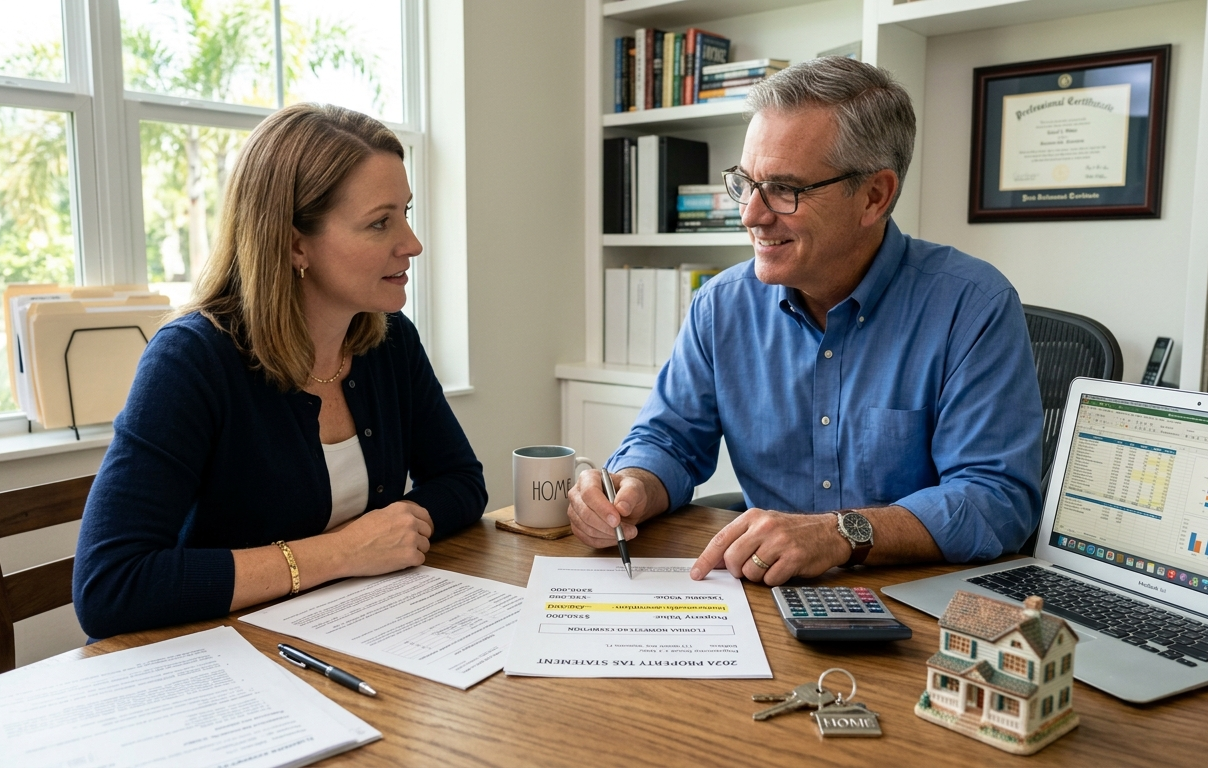
Florida is known for its relatively high property taxes compared to some other states, but there is a significant silver lining for primary residents. When calculating the cost of buying a home in Florida, you must factor in the "Save Our Homes" cap and the Homestead Exemption. The Homestead Exemption can decrease the assessed value of your primary residence by up to fifty thousand dollars, which can lead to substantial annual savings.
It is important to note that when a home is sold, the property taxes are "un-capped." This means the new owner will likely pay taxes based on the full, current market value rather than what the previous owner was paying. This is a common trap for new residents who look at the seller's tax bill and assume their bill will be the same. Always estimate your future taxes based on the new purchase price to get an accurate picture of your ongoing cost of buying a home in Florida.
Homeowners Insurance and the "Florida Factor"
Insurance is perhaps the most discussed variable in the Florida real estate market today. Because of the state's geography, homeowners must consider hurricane, windstorm, and flood insurance. These are often separate policies and can significantly impact the monthly cost of buying a home in Florida. Properties in designated flood zones or those built before modern building codes often command much higher premiums.
To mitigate these costs, many buyers look for homes with "wind mitigation" features, such as impact-resistant windows, hurricane shutters, and reinforced roof-to-wall connections. A positive wind mitigation report can lead to significant discounts on your insurance policy. If you are comparing different states, you might find that the Florida vs Texas cost of living analysis shows that while Florida lacks income tax, the insurance and property tax structures create a different financial profile that requires careful planning.
Inspection Fees: Protecting Your Investment
A professional home inspection is a non-negotiable part of the cost of buying a home in Florida. A standard inspection covers the structural integrity, electrical systems, plumbing, and HVAC. In Florida, you should also consider specialized inspections for wood-destroying organisms like termites, as well as mold and radon tests. Given the humid climate, ensuring the home is free of water damage and pests is vital for your long-term financial health.
An inspection typically costs between four hundred and eight hundred dollars, depending on the size and age of the home. While it might seem like an extra expense, it can save you thousands by identifying "deal-breaker" issues before you are legally committed to the purchase. If a major issue is found, you can often negotiate with the seller to have the repair completed or to receive a credit toward your closing costs, effectively lowering your out-of-pocket cost of buying a home in Florida.
Appraisal and Lender Fees
If you are financing your home, your lender will require a professional appraisal to ensure the property is worth the amount you are borrowing. An appraisal usually costs between five hundred and seven hundred dollars. If the appraisal comes in lower than your purchase price, you may be required to cover the "appraisal gap" in cash or renegotiate the price with the seller. This is a critical variable in the cost of buying a home in Florida during periods of rapid market growth.
Lender fees also include "points" which are optional fees paid upfront to lower your interest rate. While this increases your closing costs, it can save you tens of thousands of dollars in interest over the life of the loan. Deciding whether to pay points is a personal financial choice that depends on how long you plan to stay in the home. The more years you stay, the more the initial cost of buying a home in Florida is offset by the lower monthly payments.
HOA and CDD Fees
Many Florida communities are part of a Homeowners Association (HOA) or a Community Development District (CDD). These fees cover everything from lawn maintenance and security to community pools and infrastructure bonds. When calculating the total cost of buying a home in Florida, these recurring monthly or annual payments must be included in your DTI (debt-to-income) ratio.
HOA fees can range from fifty dollars a month to over a thousand for luxury beachfront condos. CDD fees are often included in your annual property tax bill and are used to pay back the bonds that built the community's roads and utilities. While these fees add to your monthly overhead, they often preserve property values and provide amenities that would be more expensive to maintain individually. Transparency in these fees is essential for a realistic budget.
Home Maintenance and Utility Costs
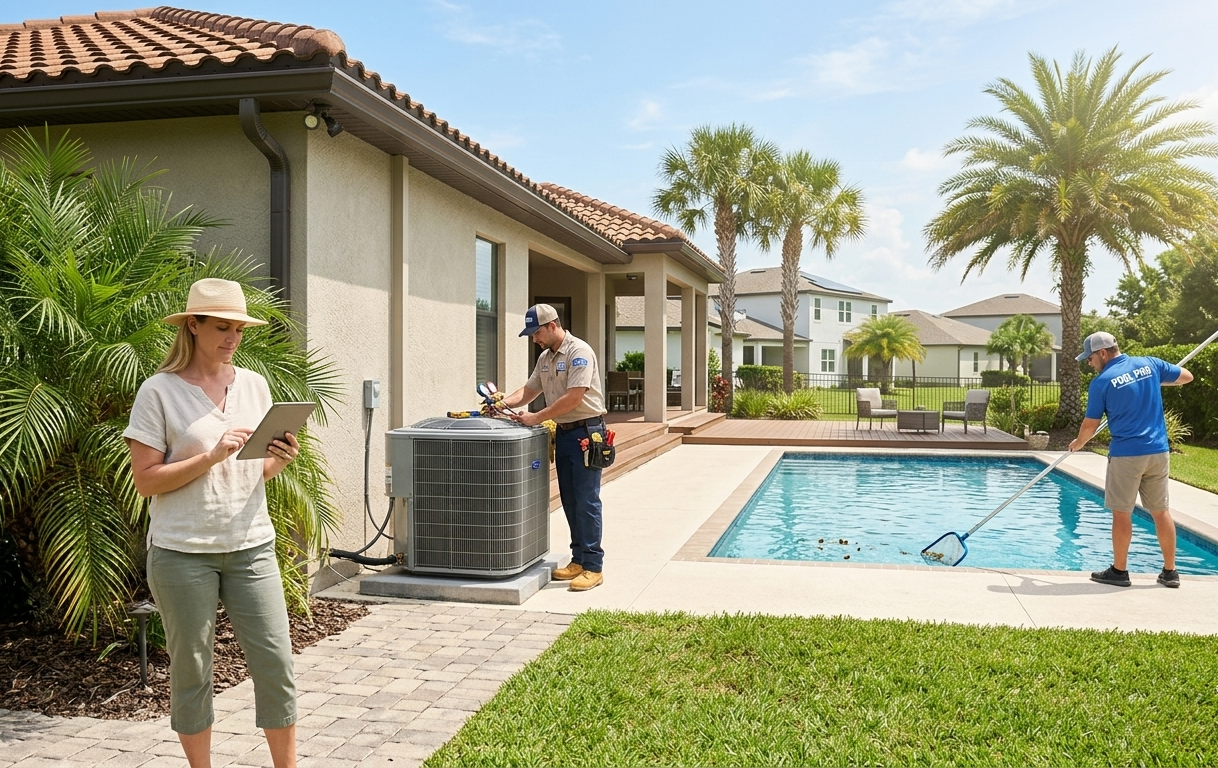
The "cost of ownership" doesn't end at the closing table. Florida’s heat and humidity mean that air conditioning systems work hard year-round. Maintenance for your HVAC system, pool service, and pest control are recurring parts of the cost of buying a home in Florida. Setting aside a "maintenance fund" of roughly one percent of the home's value each year is a smart way to handle unexpected repairs without financial stress.
Utilities like water, electricity, and sewer can also vary by municipality. Modern, energy-efficient homes built to current codes often have lower utility bills, which helps offset a higher purchase price. When evaluating a potential home, asking the seller for a history of utility bills can give you a clear window into the actual month-to-month cost of buying a home in Florida for that specific property.
Moving and Set-Up Expenses
Once you own the home, you still have to get there. Moving costs can range from a few hundred dollars for a local DIY move to several thousand for a full-service cross-country relocation. Additionally, you will likely have "set-up" costs such as new window treatments, furniture to fit the new layout, and utility deposits. While these aren't part of the real estate transaction itself, they are very real parts of the cost of buying a home in Florida.
Many new homeowners find that they spend an additional one to two percent of the home's value in the first six months on improvements and personalization. Planning for these "hidden" expenses ensures that you can enjoy your new Florida lifestyle without feeling "house poor" immediately after moving in.
Tips for Reducing Your Florida Home Purchase Costs
While many costs are fixed, there are several ways to reduce the overall cost of buying a home in Florida. First, shop around for your mortgage and your homeowners insurance. Different lenders and carriers have different risk appetites and may offer significantly better rates for the same property. Second, consider a home that is "move-in ready" to avoid the high costs of materials and labor for renovations.
Another tip is to time your move during the "off-season" if possible, as moving companies and even some lenders may offer incentives during slower months. Finally, work with a local expert who understands the nuances of Florida's tax and insurance laws. They can help you identify properties with lower tax assessments or better wind mitigation ratings, directly impacting your long-term cost of buying a home in Florida.
The Long-Term Value of Florida Real Estate
Despite the various fees and taxes, Florida real estate remains a strong investment. The state's consistent population growth and limited land in prime coastal areas drive long-term appreciation. When you view the cost of buying a home in Florida as an investment in your future, the upfront fees become more manageable. You are buying more than just a house; you are buying into a robust economy and a lifestyle that millions of people desire.
Over time, as you build equity and your property value increases, the initial closing costs become a small fraction of your total net worth. The key is to enter the market with a clear head and a detailed budget. By understanding every facet of the cost of buying a home in Florida, you turn a complex process into a manageable and rewarding milestone.
Conclusion
Purchasing a home in Florida is a multi-layered financial process that requires more than just a down payment. By accounting for closing costs, specialized insurance, property taxes, and recurring fees like HOAs, you can create a realistic financial roadmap for your move. The cost of buying a home in Florida is an investment in a unique lifestyle and a growing market. While the fees and taxes might seem daunting at first, the benefits of Florida residency, including the lack of state income tax and the Homestead Exemption, offer significant long-term advantages. With the right preparation and professional guidance, you can navigate these costs and secure a beautiful home in the Sunshine State that fits your budget and your dreams.
Frequently Asked Questions
What is the average closing cost in Florida?
Average closing costs in Florida typically fall between two and five percent of the home's purchase price. This includes taxes, title insurance, lender fees, and escrowed items. For a five hundred thousand dollar home, you should expect to pay between ten thousand and twenty-five thousand dollars at the closing table.
How much is the documentary stamp tax on deeds?
In most Florida counties, the tax is seventy cents per one hundred dollars of the purchase price. For a property sold for four hundred thousand dollars, the tax would be two thousand eight hundred dollars. Miami-Dade County has its own specific rate structure.
Do I really need flood insurance if I'm not on the coast?
While not always legally required by a lender if you are outside a high-risk zone, flood insurance is highly recommended throughout Florida. Heavy tropical rains can cause localized flooding even in areas far from the ocean, making it a wise addition to your cost of buying a home in Florida.
What is the "Save Our Homes" cap?
This is a Florida constitutional amendment that limits the annual increase in the assessed value of a homesteaded property to three percent or the percent change in the Consumer Price Index, whichever is lower. This helps keep property taxes predictable for long-term residents.
Can I negotiate who pays for the title insurance?
Yes. In many Florida counties, it is traditional for the seller to pay for the owner's title insurance policy, while in others, the buyer typically pays. However, like everything in a real estate contract, this is negotiable and can be used as a lever during the offer process.
How much should I budget for a Florida home inspection?
A comprehensive suite of inspections, including a general home inspection, termite (WDO) inspection, and wind mitigation report, usually costs between five hundred and nine hundred dollars. This is a vital upfront cost of buying a home in Florida to protect your investment.


