
Published March 4, 2026
Property tax in Florida 2026: The Essential Guide for New Residents

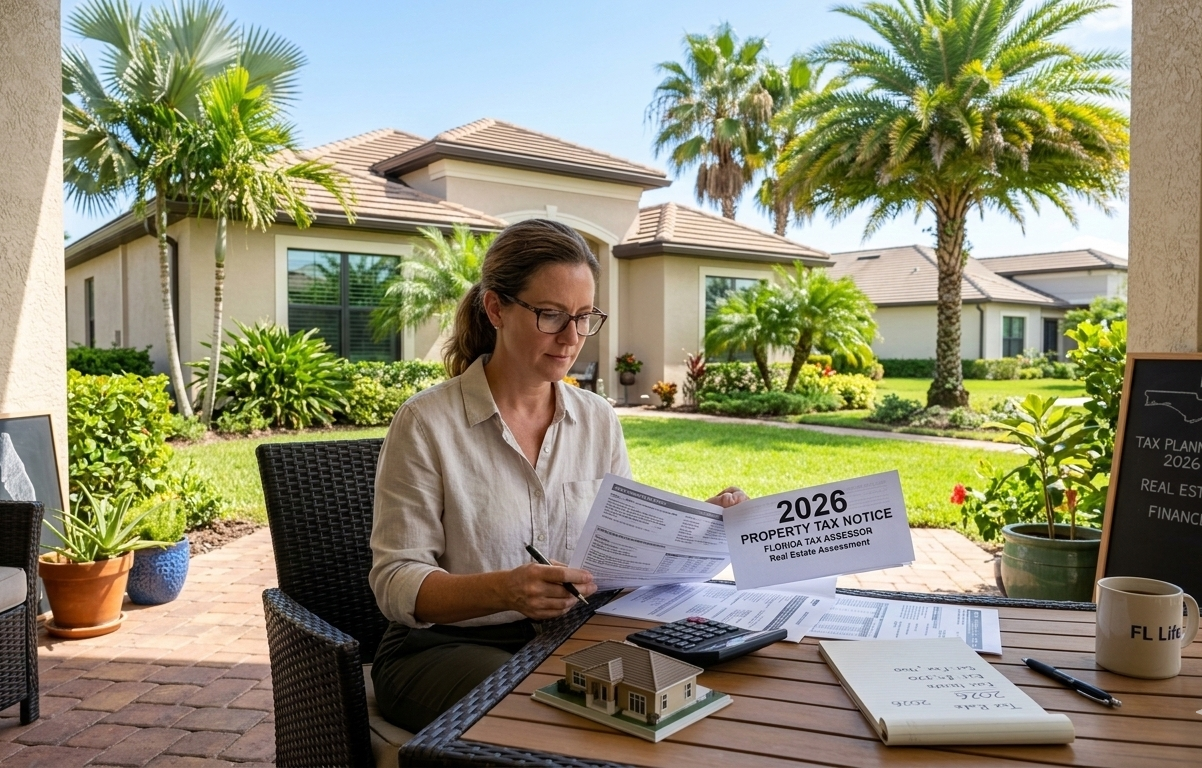
Moving to the Sunshine State is often a strategic financial decision. While the lack of a state income tax gets most of the headlines, understanding the nuances of property tax in Florida is equally important for maintaining your long-term budget. As we move through 2026, the local tax landscape has introduced several significant protections and exemptions that specifically benefit those who call this state their permanent home.
Florida’s approach to property taxation is designed to reward permanent residency while funding essential local services like schools, infrastructure, and law enforcement. For new residents, the first year of ownership can sometimes bring a bit of sticker shock because taxes reset upon a sale. However, once you establish your primary residence, you unlock a suite of legal shields that keep your costs predictable. This guide breaks down exactly what you need to pay, how to save, and the critical deadlines you cannot afford to miss this year regarding property tax in Florida.
The Mechanics of Florida Property Tax
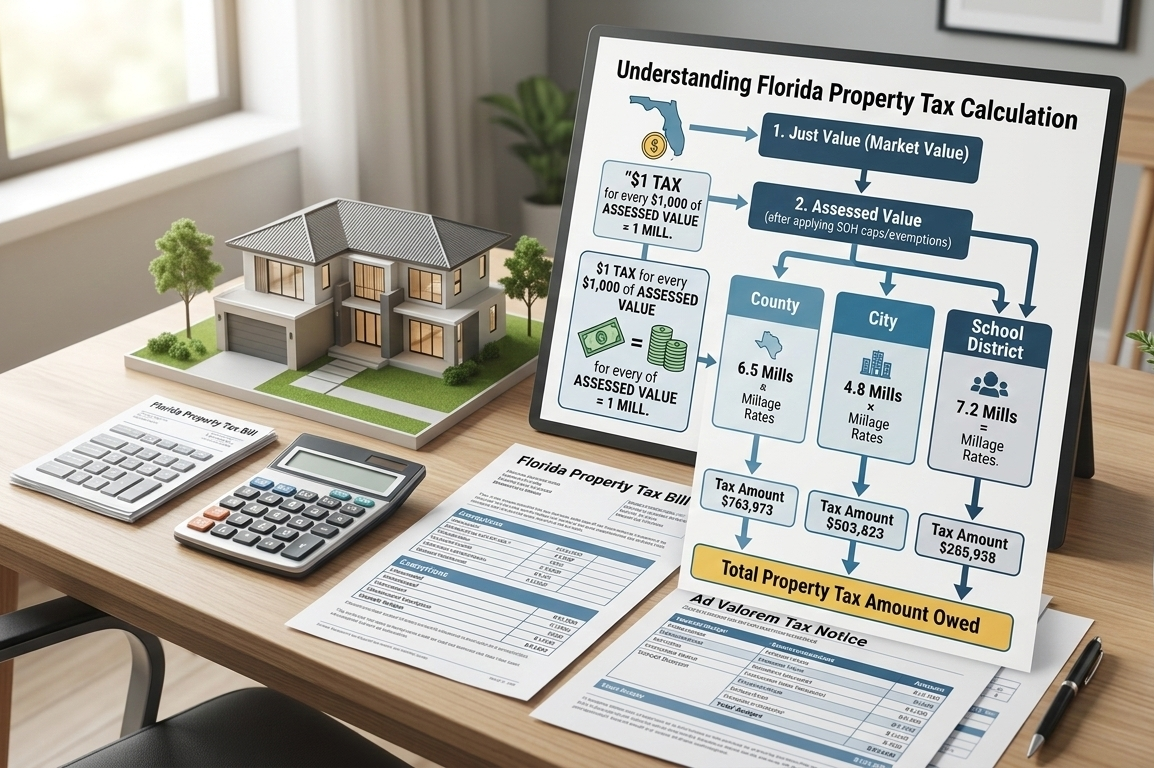
Unlike states that apply a flat percentage across the board, the state uses a millage rate system. A mill represents $1 for every $1,000 of assessed property value. Each county, city, and school district sets its own millage rate based on its annual budget requirements. This means that even if two homes have the same market value, the actual property tax in Florida could look very different if one is in Miami-Dade and the other is in a more rural part of the state.
When you first purchase a home, the county property appraiser determines its market value. It is a common misconception among new buyers that they will pay the same amount as the previous owner. In reality, the previous owner likely had a tax cap in place for years. When you buy that property, the assessment resets to the current market price, which is why the initial property tax in Florida might be significantly higher than the one listed on the old real estate flyer.
The 2026 Homestead Exemption: Your First Line of Defense
The single most important step for any new resident is filing for the Homestead Exemption. This is a legal requirement to unlock nearly all other tax benefits in the state. For the 2026 tax year, this basic exemption has become more valuable. Traditionally a flat $50,000, the state now adjusts this amount annually for inflation, impacting the final property tax in Florida for homeowners.
As of 2026, the homestead exemption has increased to approximately $51,411. This amount is subtracted from your home’s assessed value before the tax rates are applied. For a high-value property in a competitive area, this exemption can save a homeowner between $500 and $1,000 every single year. To qualify, you must own the property and make it your permanent residence as of January 1st. Many buyers who are looking at homes for sale in Florida during the spring or summer often forget that they won't see the benefit of this exemption until the following calendar year.
Protecting Your Equity with the Save Our Homes Cap
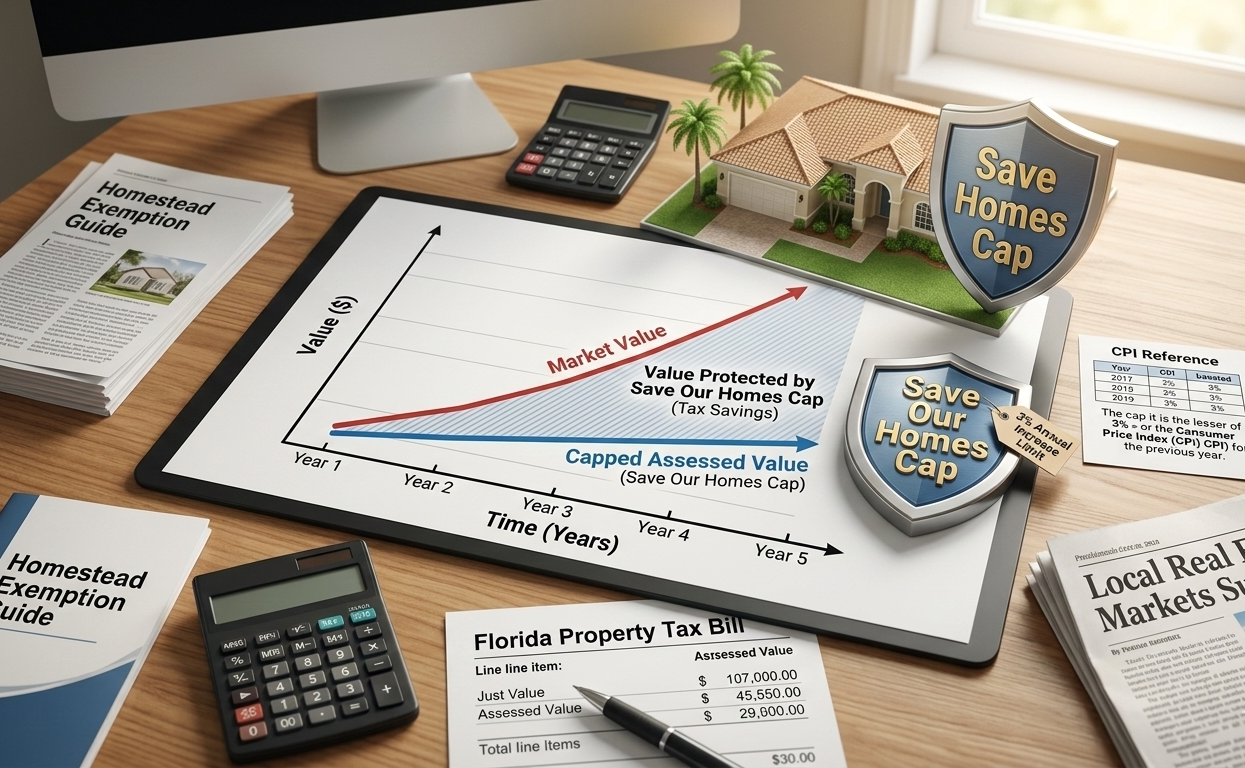
Once you have secured your homestead status, you are protected by the Save Our Homes assessment limitation. This constitutional amendment prevents the assessed value of your home from rising too quickly, regardless of how fast the real estate market is booming. This is a massive factor in controlling the long-term property tax in Florida.
The limitation caps the annual increase in your home’s assessed value to 3% or the percent change in the Consumer Price Index, whichever is lower. In 2026, this cap is a vital tool for financial stability. Even if your neighborhood sees a massive 15% jump in market value over a single year, your tax assessment can only crawl upward by that small capped percentage. Over five to ten years, this creates a massive gap between what your house is worth and the value used to calculate property tax in Florida.
Understanding Portability: Taking Your Savings with You
One of the most unique features of property tax in Florida is portability. If you have lived in a local home for several years and built up a large assessment benefit, you don't have to leave that savings behind when you move. Florida law allows you to transfer up to $500,000 of your tax savings to a new permanent residence within the state.
This portability window was expanded recently to include three tax years. This means if you sold your home in 2024, you have until the end of 2026 to establish a new homestead and claim your old tax credits. For residents who are selling property in Florida to upgrade to a larger family home, this can result in thousands of dollars in annual savings on the new property's bill. It effectively rewards long-term residents for staying within the state and reduces their overall property tax in Florida.
Important Filing Deadlines for 2026
Timing is everything when dealing with the county property appraiser. If you miss a deadline, the state is rarely lenient, and you could lose your exemptions for the entire year, resulting in a much higher property tax in Florida.
January 1, 2026: You must have legal title to the property and be a permanent resident by this date to qualify.
March 2, 2026: This is the absolute deadline to file your initial application for the Homestead Exemption.
Mid-August 2026: You will receive your TRIM notice. This is not a bill, but a notification of your home’s value and the proposed rates for your property tax in Florida.
November 2026: Official bills are mailed out. If you pay early in November, most counties offer a 4% discount, which is an easy way to save even more money.
Millage Rates and Regional Differences
While the state sets the rules for exemptions, local governments set the rates. If you look at the Florida housing market forecast for 2026, you will see that different regions are coping with different infrastructure needs. Urban centers like Miami or Orlando often have higher millage rates because they provide more extensive public services.
When you are calculating the total property tax in Florida, always check the specific millage rate for the municipality where the home is located. A home inside city limits will almost always have a higher bill than a home in an unincorporated area. This regional variance is a major reason why buyers often compare different counties before committing to a purchase.
Special Exemptions for Veterans and Seniors
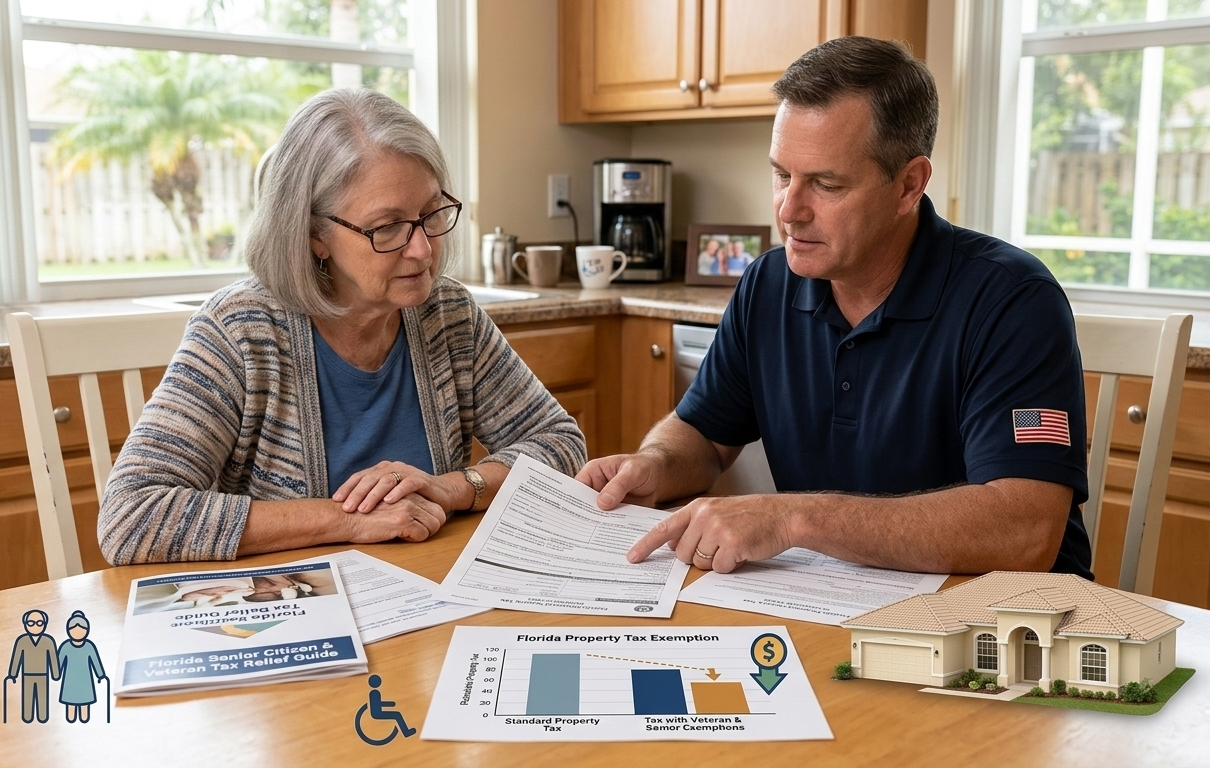
Beyond the standard homestead rules, the state offers several add-on exemptions for specific groups. These can significantly lower the amount of property tax in Florida for those who qualify. For example, many counties offer an additional exemption for residents 65 and older who meet certain income requirements.
Furthermore, veterans with a service-connected disability of 10% or more are entitled to specialized exemptions. For those who are 100% permanently and totally disabled due to their service, they may be exempt from the vast majority of their property tax in Florida altogether. Widows, widowers, and residents with legal blindness also qualify for significant reductions, ensuring the tax code remains supportive of vulnerable populations.
How to Estimate Your Future Tax Bill
If you are a prospective buyer, you can use the county property appraiser’s website to find a tax estimator tool. By plugging in the expected purchase price and checking the boxes for the exemptions you plan to file, you can get a realistic look at your future monthly escrow payments.
Remember that the taxes you see on the current listing are almost certainly lower than what you will pay in year two of ownership due to the reset of property tax in Florida. Always budget for this change. A common rule of thumb is to estimate about 1.1% to 1.3% of the purchase price as your starting point for annual taxes before exemptions are applied, though this varies significantly by county.
The Role of the Value Adjustment Board (VAB)
If you receive your TRIM notice in August and believe the county has overvalued your property, you have the right to a hearing. The Value Adjustment Board is an independent body that hears petitions regarding property assessments and exemption denials that affect your property tax in Florida.
Filing a petition with the VAB is a formal process that requires evidence. If homes similar to yours have recently sold for less than your assessed value, you may have a strong case for a reduction. However, keep in mind that the value determined by the appraiser is based on the market as of January 1st.
Conclusion
Navigating the world of property tax in Florida can feel overwhelming at first, but the system is built with a clear bias toward protecting permanent residents. By being proactive and filing your homestead paperwork before the March deadline, you lock in a set of protections that are among the strongest in the United States. Whether it is the inflation-adjusted exemption amounts of 2026 or the long-term stability of the Save Our Homes cap, the state ensures that your home remains an affordable investment for years to come. Take the time to understand your specific county millage rates and keep an eye on your mailbox for that important TRIM notice each August. With the right planning, you can enjoy all the benefits of sunshine state living with total financial confidence.
Frequently Asked Questions
Does Florida have a state-level property tax?
No. Property taxes are only levied at the local level by counties, cities, and special taxing districts.
Can I file for a homestead exemption if I rent out my home?
No. The homestead exemption is strictly for your primary, permanent residence. Renting the property out for more than 30 days per year for two consecutive years can result in losing the exemption.
What is the portability maximum for 2026?
As of 2026, the maximum amount of tax savings you can port from one home to another is $500,000.
Why did my property tax go up so much after I bought my house?
This is likely due to the assessment reset. Florida law requires a property to be reassessed at full market value following a change in ownership, removing the previous owner’s cap.
Do I need to reapply for my homestead exemption every year?
In most counties, the exemption renews automatically as long as there is no change in ownership or use of the property.
Can a spouse claim a separate homestead on a different property?
Generally, a married couple is limited to one homestead exemption between them, unless they can prove they are living as separate family units in a legal sense.


